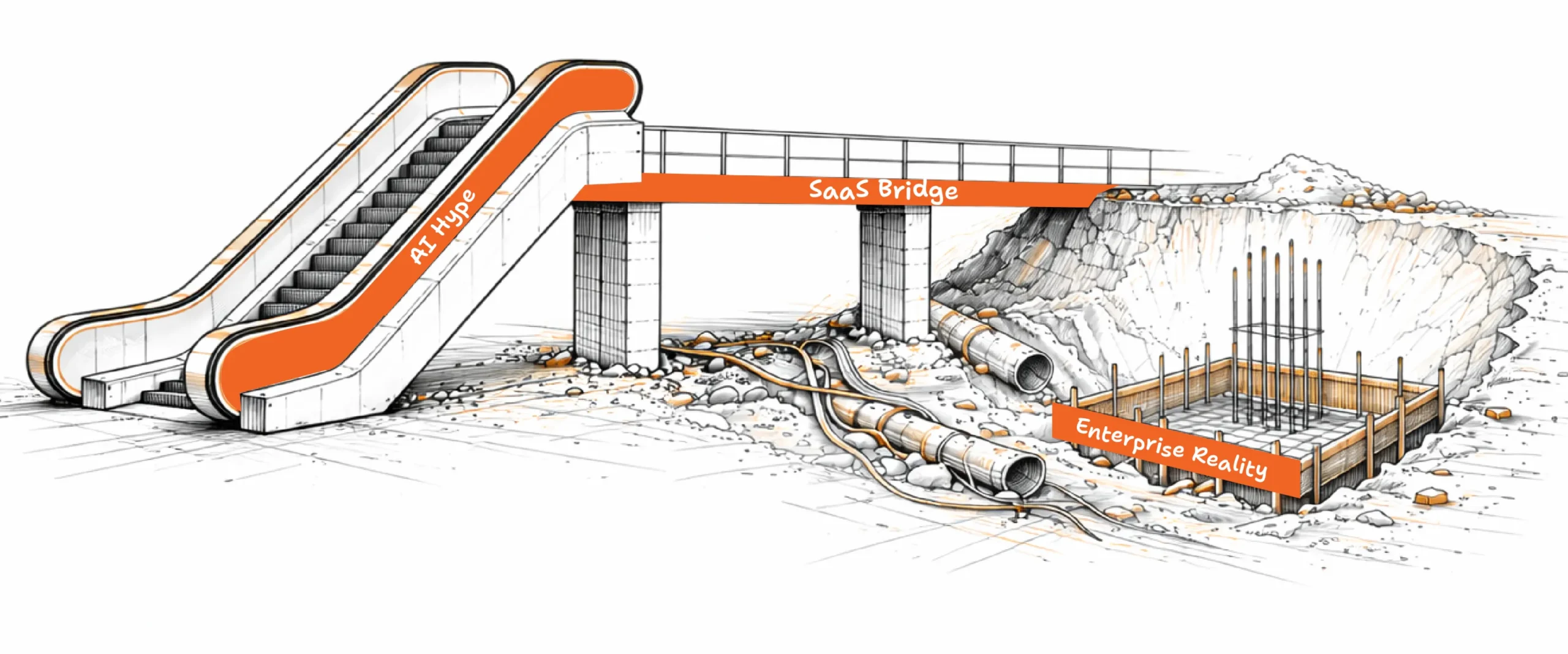
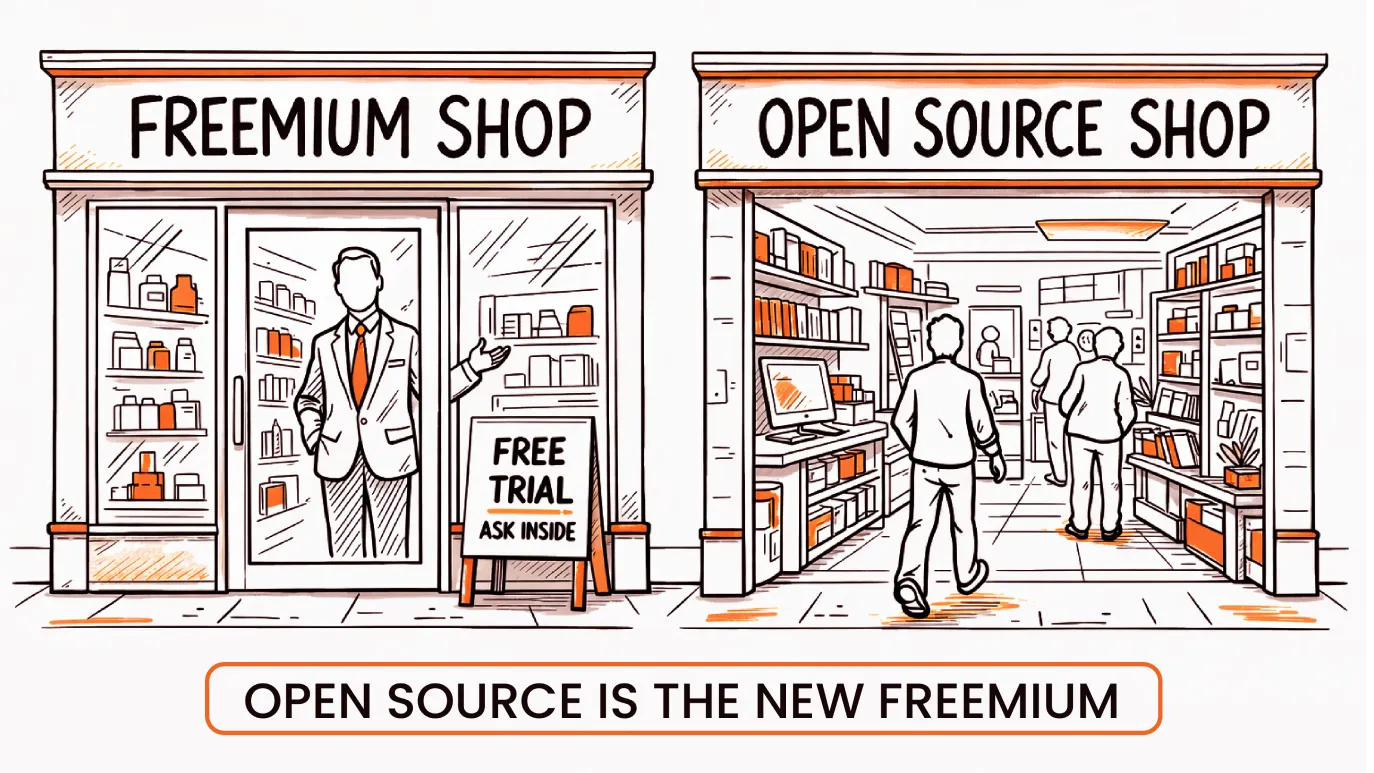
We spend a lot of time thinking about distribution in B2B software. CAC, PLG, bottoms-up vs top-down sales. But there’s a shift happening that I think is underappreciated. Open source is becoming one of the most powerful trust signals in software right now, and it’s no longer just a developer story.
The old freemium playbook worked because it removed friction. Slack spread through companies without a purchase order. Dropbox grew because sharing a file pulled your colleague in. The product sold itself.
But freemium had a ceiling. At some point you still had to convince a buyer that your SaaS company, one they’d never met, was trustworthy enough to hold their data and not lock them in forever.
Open source handles that differently. You’re not asking anyone to trust your word. You’re showing them the code.
And increasingly, that’s resonating with people who have never written a line of code in their lives.
ERPNext, Mattermost and friends: what this looks like in real life
ERPNext is one prominent example. It’s a full open-source ERP covering finance, HR, procurement and inventory. The champions inside companies aren’t engineers. They’re CFOs and ops managers who are fed up with Oracle and SAP pricing and want something they actually control. They self-host it, prove it works internally, and eventually pay Frappe (the company behind it) for managed cloud hosting and support. The community drives adoption, the managed service is where the revenue sits. No developer required at any point in that journey.
Mattermost won in government, defence and healthcare not because it out-featured Slack, but because those buyers couldn’t legally use Slack. Data sovereignty requirements meant they needed software they could audit and host themselves. The open source nature wasn’t a differentiator on a features slide, it was the entire procurement argument. They give away the community edition, then charge for enterprise controls like SSO, compliance exports and admin tooling to the same organisations that self-hosted for free.
Twenty and OpenProject follow a similar pattern. Sales managers and project leads are driving adoption because “you own your data and you’re not locked in” lands well with anyone who’s been stung by SaaS pricing before. Both are building towards managed cloud tiers as the monetisation path.
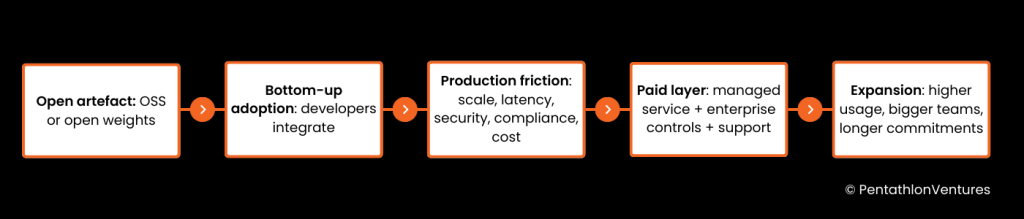
What’s striking about all of these is the contrast with how B2B software has traditionally spread. Enterprise SaaS companies spend years and hundreds of employees on sales cycles, implementation consultants, procurement processes, and customer success teams just to get a product embedded inside a large organisation. Open source compresses all of that. The software lands through curiosity and community, not contracts.
One developer, zero sales team: the OpenClaw story
Which brings me to the example that I think makes this point most sharply. OpenClaw.
One developer. No sales team. No marketing budget. No enterprise implementation cycle. Peter Steinberger built an open-source personal AI assistant, put it on GitHub, and within weeks had thousands of non-technical business owners running it as an AI executive assistant, managing their inboxes, calendars and follow-ups through WhatsApp and Telegram. The kind of distribution a well-funded SaaS startup would spend years and millions trying to manufacture, a solo developer achieved in weeks by making the code open and letting trust do the work.
The reason it resonated is worth unpacking. OpenClaw combined two things that are actually independent. It was open source, so anyone could inspect the code. And it ran locally, so data never left the user’s machine. Most people experienced both as one thing, but they’re not the same. The open source nature meant you could trust what the software was doing. That combination, transparent code and local data, was what made non-technical business users comfortable handing it access to their email, calendar and messages.
It wasn’t without friction. Running it on your primary machine meant giving an AI agent access to your entire computer, which isn’t sensible. The proper setup was a dedicated Mac Mini or a clean cloud VM. And monetisation was an unsolved problem. There was no hosted tier, no paid plan, no revenue. The infrastructure was entirely the user’s responsibility.
Great adoption, messy business model: the OpenClaw dilemma
Peter Steinberger was hired by OpenAI before any of that got figured out. Which tells you something. OpenAI didn’t look at the revenue. They looked at what one person had built, how fast it had spread, and who was using it. The distribution alone was worth acquiring.
OpenAI will likely keep it open source and use it as a way to deepen adoption of GPT-based models as the backend of choice. The project drives community growth, OpenAI captures the value through other means. That’s actually a cleaner version of the open source monetisation model than most standalone companies manage, because the adjacent revenue stream already exists.
But the broader point stands regardless of what happens to OpenClaw specifically. Open source is doing what freemium did a decade ago. It’s removing the trust barrier, shortening the time to adoption, and letting the software spread through communities rather than sales teams. The difference is that it’s doing it with a stronger signal, and it’s doing it in categories well beyond developer tools.
The companies worth watching are the ones that figure out how to convert that trust into a durable paid layer without undermining what made people show up in the first place. That’s the hard part. And it’s where the interesting businesses either get built or stall.
Curious what others think. Which categories do you see this working in over the next few years, and where do you think the model runs into trouble?