
On stage at Pentathlon Day sat Kailash Katkar and Sanjay Katkar, the brothers behind Quick Heal Technologies – a company that started as a side hustle in a tiny repair shop, became India’s first homegrown antivirus brand, and eventually listed on the public markets.
In front of them, a room full of B2B SaaS founders listened to a story built on decades of services revenue, channel partners, floppies, and hard choices.
In a funding ecosystem obsessed with the latest valuation screenshot, this was a different kind of success story.
Act I – From repair shop to antivirus without a term sheet in sight
The origin of Quick Heal begins with a workshop.
In the late 1980s and early 1990s, Kailash had dropped out of school and built a reputation in Pune as “the guy who can fix anything.” He started with radio repair, moved to calculators and then to laser‑posting machines used by banks before computers became mainstream. These were semi‑mechanical, semi‑electronic systems, so getting them to work meant understanding gears and circuits, not just code.
One day, he walked into a bank and found the staff on strike. The reason was computers.
The bank was bringing in new computer systems, installed behind glass, and employees feared for their jobs. Kailash realised those laser‑posting machines he had mastered were going to be replaced. If he stayed where he was, his expertise would become useless.
At home, his younger brother Sanjay was trying to get into electronics engineering. When that didn’t work out, Kailash pushed him toward something almost nobody else wanted at the time: computer science. Seats in BCS were lying vacant as people weren’t yet sure these machines were worth betting a career on.
Sanjay joined one of only two colleges in Pune offering a Bachelor’s in Computer Science. While he learnt operating systems and programming in the lab, Kailash was out in the field servicing the first generation of PCs. Those machines started coming back to the workshop with strange problems. Files disappearing, systems acting “sick” and customers called them hardware issues.
They were viruses.
Sanjay began writing small utilities to clean specific infections – one virus at a time, one floppy at a time – so his brother could fix machines faster. It was a way to reduce rework in a service business. But the pattern was already there:
- Deep exposure to a real‑world problem (systems going down, banks losing days of work)
- A service mindset (get the customer back up, then worry about the sophistication)
- A small piece of software quietly making the whole process less painful
For today’s Indian B2B founders, that “services → product” arc is familiar. Many of the most interesting SaaS companies in the country are built by people who lived inside a messy problem for years through consulting, projects, or internal tools before packaging the solution. Quick Heal is an early, unvarnished version of that story.

Act II – When culture becomes the moat
By the early 2000s, Quick Heal had become a full antivirus product. Global brands were entering the Indian market and technically, they were strong but financially, they could out‑spend the Katkar brothers easily.
On paper, that should have been the end of a small local player. Instead, Quick Heal grew to dominate the consumer antivirus market in India, holding the largest market share for years.
How did that happen?
Sanjay describes one simple difference: most global products quarantined or deleted infected files by default. That made sense in markets where backups were common. In India, many customers had no reliable backup habits at all. If you deleted their only copy, you saved them from a virus as well as caused data loss.
Quick Heal built its product around that reality. It emphasised cleaning and restoring files rather than simply isolating them. It sat with customers to understand entire networks that would take 7 or 8 days to clean manually, and then asked, “What would it take to get this down to hours?”
Features followed from those conversations, not the other way around.
Over time, global competitors could catch up on scanning engines, signatures, and UI. What they struggled to copy was how Quick Heal showed up.
Sanjay uses a simple definition: culture is what happens when you’re not in the room.
Inside Quick Heal, that culture meant:
- Treating “customer first, partner first” as non‑negotiable
- Encouraging engineers and support staff to take ownership of problems, not just tickets
- Training people to think like problem‑solvers, not form‑fillers
Externally, it showed up as:
- Being present and responsive in crises
- Designing for low‑infrastructure environments
- Sticking with partners through cycles instead of burning bridges at the first disagreement
In their words, two products can have the same feature set. The difference becomes culture which is very hard to clone.
For B2B SaaS founders, especially in crowded categories, this lesson bites. Competitors can copy your UI, your pricing, even your messaging. What they struggle to replicate is the way your team thinks about customers and partners when nobody is watching. Over a decade or more, that is the real moat.
Act III – Letting go: from bottlenecks to multipliers
A lot of founders in the room nodded at the next part of the story because it sounded uncomfortably familiar.
In the early years, Sanjay wrote almost all the code himself. As they grew, he kept doing what he knew best: coding, reviewing every pull request, obsessing over details.
He admits that he became a bottleneck.
- Engineers waited on his reviews
- Features slowed down
- Nothing shipped without his sign‑off
Over time, he realised that this “control” was costing them speed and initiative. When the founder holds the steering wheel too tightly, the team stops steering.
The turning point was deliberate: hiring people he could trust, and then actually letting go.
- He stopped reviewing every line of code
- He encouraged engineers to propose and own features end‑to‑end
- He shifted his focus to architecture, direction, and mentoring
Once he did that, innovation accelerated, new versions shipped faster and people brought ideas he would never have thought of on his own.
Kailash went through a parallel journey on the business side.
He started as the person who did everything:
- Managed 7–10 computer repair engineers
- Ran sales for maintenance contracts and product
- Handled channel partners, demos, collections, and support
He assumed that if he just worked harder, he could continue to manage it all. As revenue grew, that approach broke. He found himself:
- Confused about where his responsibility ended and the partner’s began
- Constantly firefighting between distributors, dealers, and end‑customers
- Facing financial stress because whatever he made from maintenance wasn’t enough to fund product development
A friend from IBM, who had heard him vent, took 15 days off to help. He sat quietly in Quick Heal’s office, watching how each team worked: development, support, reception, accounts, sales. Then he handed Kailash a 30‑page document detailing what needed to change.
The language was heavy with management jargon. Kailash struggled with it, but he and Sanjay listened carefully. They implemented just the first three pages:
- Hire managers, not just more executives
- Set clear goals and targets for sales and support
- Define responsibilities and contracts with partners
Even that small slice was transformative. With proper managers and clear SOWs for channel partners, they could:
- Enforce payment terms
- Drop partners who didn’t deliver or pay on time
- Spend more time on strategy and less on daily chaos
Quick Heal shifted from being entirely founder‑dependent to being an organisation that could scale.
For founders in the audience, this was a mirror. The instinct to control everything is often what gets a company off the ground. At some point, the same instinct becomes the ceiling. Trust and structure are not “big company” problems. They are the prerequisites for any company that wants to last long enough to list.
Act IV – Governance, Sequoia, and what an IPO really means
By the time Quick Heal caught the attention of Sequoia Capital, it was already profitable and growing. What it did not have was institutional governance.
Before Sequoia:
- Finance was largely an accounting function, not a strategic one.
- There was no real board culture.
- Many partner relationships ran on trust and verbal commitments.
After Sequoia came in, things changed quickly. The brothers talk about that era not as “VC money arrives,” but as “discipline arrives”:
- A proper finance team
- Regular board meetings with structured reporting
- Contracts, documentation, and clear compliance processes
- Tough questions on margins, product direction, and capital allocation
That foundation is what made a 2016 mainboard IPO possible.
Sanjay says something on stage that stayed with the room:
“IPO doesn’t define who you are, it exposes who you are”
Once you list, every decision is marked to market daily. The way you treat customers, partners, and employees, the quality of your accounts, the honesty of your disclosures – all of it shows up in how the market reacts over time.
They contrasted this with some of the newer SME and small‑cap IPO shortcuts: go public early on small exchanges, skip deep institutional scrutiny, and hope momentum carries you. Quick Heal took a slower path:
- Build a real business with profits and product‑market fit
- Bring in a strong VC/PE partner who forces discipline
- Learn to work with one sophisticated counterpart on governance
- Only then go public
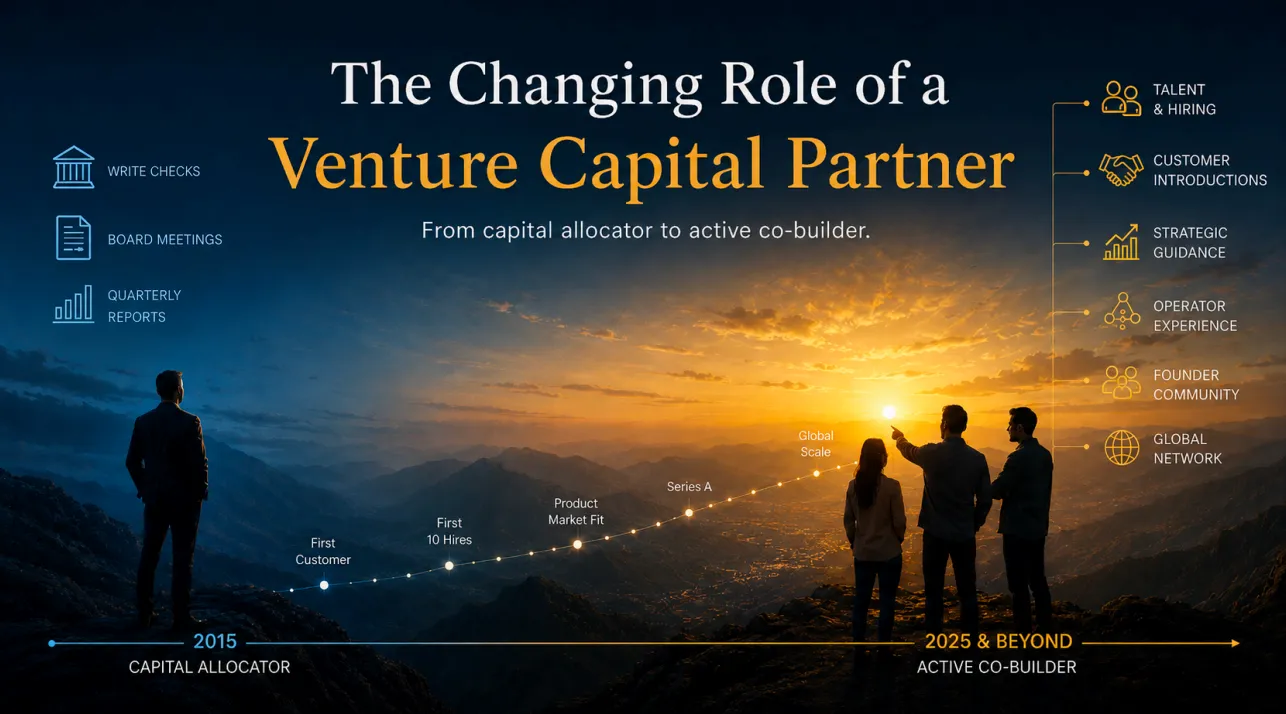
For a fund like Pentathlon, sitting in the same room, this was a useful reinforcement: the best version of venture capital is not “cheque plus pressure for vanity growth.” It is a partner that prepares you for being answerable to a much bigger, much less forgiving audience.
Act V – The power of saying “no”
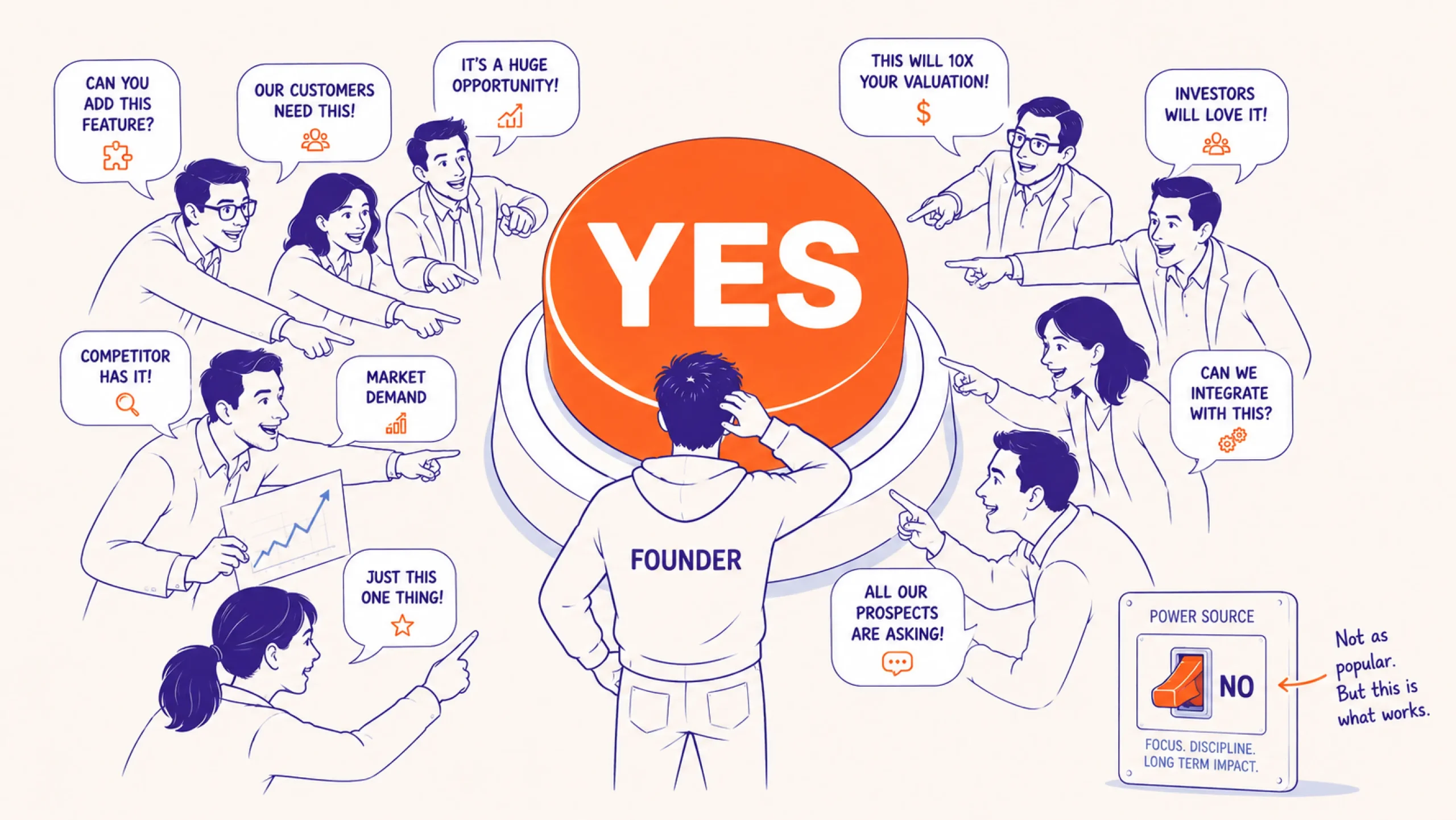
Success brought new temptations. Some of the hardest calls Quick Heal made were about deals they walked away from.
The brothers talk about a large enterprise customer who wanted a very heavy customisation of the product – with thin margins and demanding terms. Saying yes would have:
- Consumed engineering bandwidth
- Pulled the roadmap away from the broader market
- Locked them into maintaining a forked version for one logo
They said no.
Another memorable “no” involved a big media house – the Times Group – offering a large volume of free advertising in exchange for equity. For a consumer brand, that sounded attractive. But it would have complicated the cap table, potentially scaring off future institutional investors and limiting strategic options.
They said no again.
Kailash frames it simply: in the early days, you say yes to survive. At scale, indiscriminate yeses can quietly erode focus, margins, and negotiating power.
For B2B founders, the parallels are obvious:
- The enterprise logo that wants you to become their custom dev shop
- The “strategic” investor whose terms make future rounds hard
The art is knowing when that yes is a bridge and when it is a trap.
Act VI – Trust as the real enterprise feature
Quick Heal’s consumer business was only part of the story. The move into enterprise security, under the Seqrite brand, brought a fresh set of lessons.
The first approach was textbook. They went in with:
- A feature checklist
- Comparisons with other enterprise vendors
- Proof‑of‑concepts built around technical specs
Sales stalled. Buyers nodded politely, then went with familiar names.
The second attempt looked more like their early consumer journey:
- Spending time with CISOs and IT heads to understand actual pain
- Building features around those problems, not around what competitors advertised
- Showing up consistently over three to four years with improvements customers had asked for
In security, the question enterprise buyers ask is not “who has the longest datasheet.” It is “who will still be solving my problems five years from now.”
Quick Heal’s advantages here were:
- A long‑standing presence in India
- A track record of honouring support commitments
- A culture oriented around “customer first, partner first”
That kind of trust does not show up on a slide. It compounds over time.
For founders in B2B, especially in critical categories like security, this is a reminder: your real enterprise feature is not a checkbox. It is the confidence that you will still be there, still listening, still shipping, when the next crisis hits.
Act VII – Redefining success and staying sane
Toward the end of their talk, the Katkar brothers turned away from P&L to something more personal.
Sanjay said he has come to see success as “a story worth telling,” not a valuation snapshot or a newspaper headline.
- IPO is not the success
- A big investment round is not the success
Success, in his words, is whether the company you built – the way you treated customers, employees, partners – is something you can talk about with pride years later, regardless of whether you stayed private, went public, or got acquired.
Kailash picked up that thread with an example from the markets. Quick Heal’s share price has, at different times, been ₹800, ₹900, and ₹300. If you tether your self‑worth to those numbers, you will ride an emotional roller‑coaster you do not control. He pointed to how quickly fortunes swing even for giants – citing how one business magnate could briefly become one of the world’s richest men and then drop down the list within weeks.
His advice was blunt:
- Don’t anchor your happiness to stock charts or social media commentary
- Focus on your work, your expertise, and what you can do for your customers, your family, and your immediate community
- If you become a role model for the people around you – your team, your partners, your extended circle – that is more than enough
You don’t need to be a hero to billions. Being genuinely respected by the people whose lives you touch is a more durable form of success.
Implicit in their reflections is another point many founders hesitate to voice: the toll this journey takes. The mental loops. The temptation to compare your trajectory to everyone else’s. The burnout that comes from treating every quarter as a referendum on your worth.
The antidote, in their telling, is not a productivity hack. It is a different barometer for what a “good outcome” looks like over 20–30 years.
Closing – What that room really walked away with
As the session wrapped up and the applause faded, the mood in the ballroom was different from the typical “future of tech” high.
For the B2B founders and investors in that room, the most valuable takeaway was not a new framework or a hot sector to chase. It was a lived example of what it looks like to:
- Start from services and grow into a product and then a platform
- Treat culture and trust as the real moats in commoditised markets
- Use governance and discipline as prerequisites to going public, not afterthoughts
- Say no when a glamorous deal threatens long‑term focus
- Define success in terms that won’t evaporate with the next market swing
In a world where founders are encouraged to aim for unicorn status as fast as possible, the Katkar brothers offered a quieter, harder path: build something that makes sense over decades, not funding cycles.
For many in that hall, that might have been the most radical idea of all.